NASA’s Artemis III Moon-Lander Test Plan Explained
NASA’s Artemis III Moon-Lander Test Plan Explained
NASA is refining Artemis III, the mission intended to return astronauts to the lunar surface. The updated planning addresses mission objectives, crew operations, lunar-lander development, test requirements, and the broader architecture supporting future Moon missions.
Artemis III is expected to last approximately 14 days, although the final schedule and mission profile remain subject to testing, certification, integration work, and formal readiness decisions. The mission depends on several systems working together: NASA’s Orion spacecraft, the Space Launch System (SLS) rocket, a commercial lunar lander, spacesuits, communications networks, surface equipment, and ground-control infrastructure.
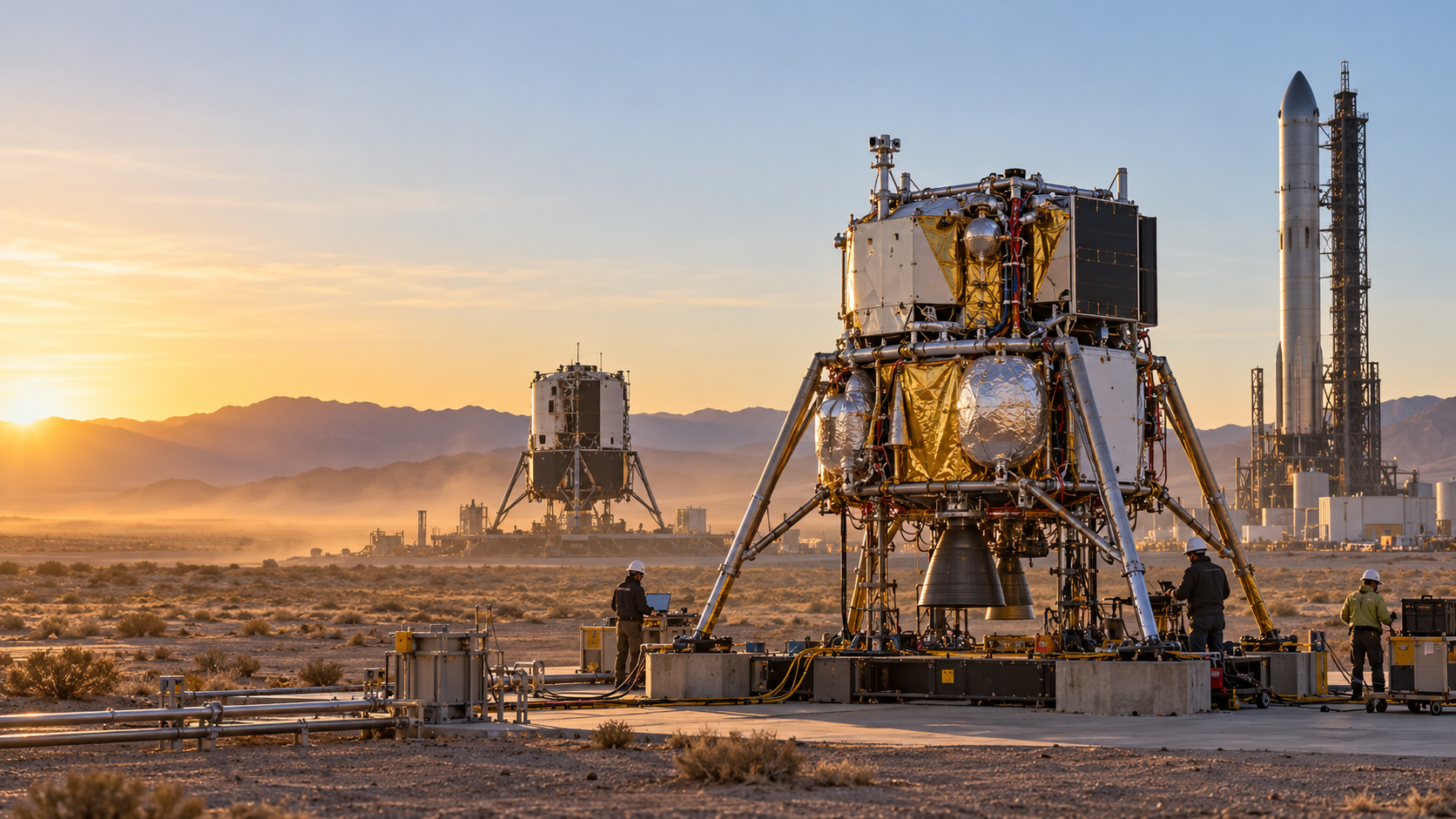
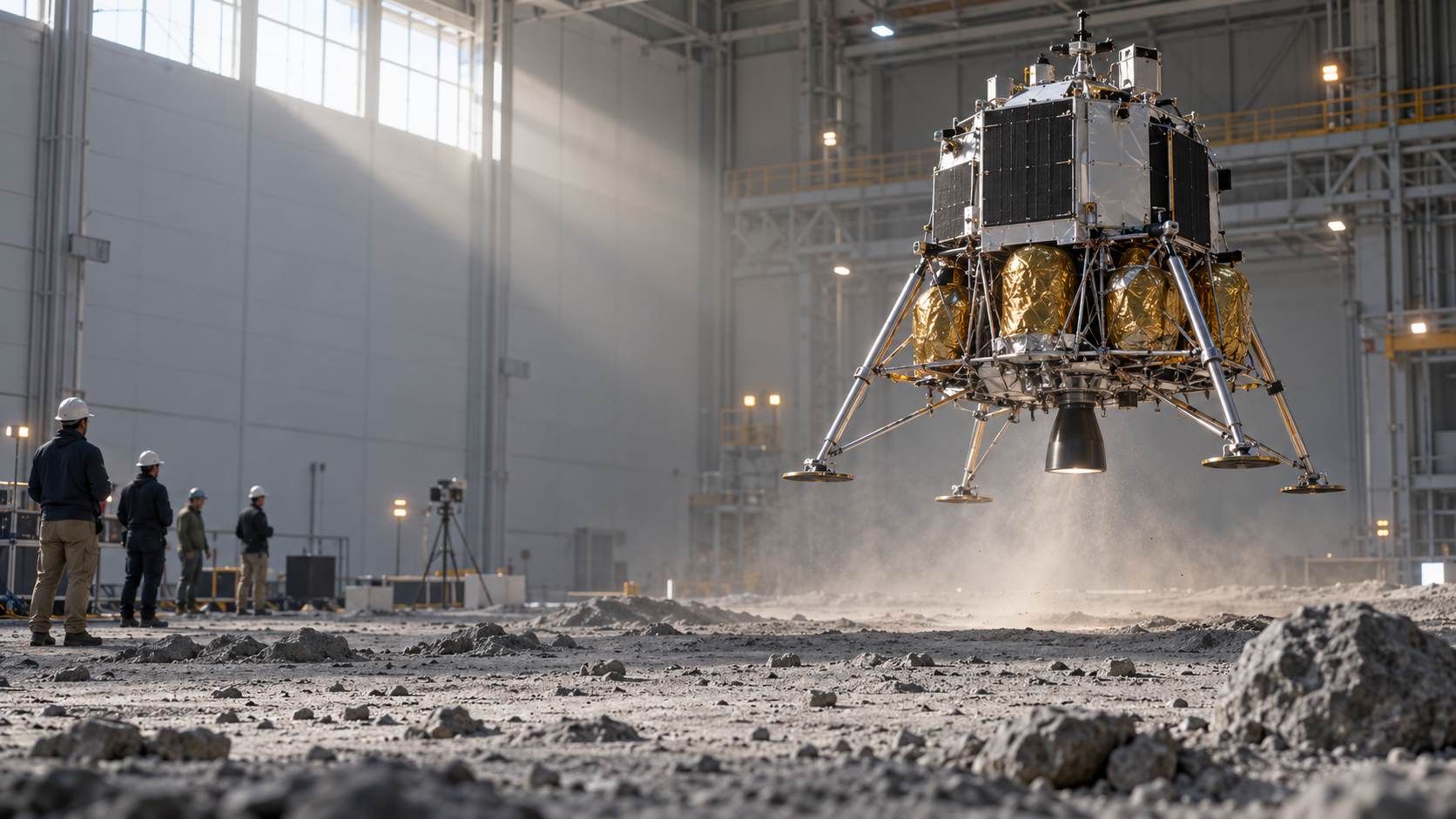
The planned Artemis III moon-lander test flight is central to that effort. NASA must verify that the lander can operate in lunar orbit, descend safely, land, support surface operations, leave the Moon, and rendezvous with Orion before astronauts depend on it.
NASA has also updated the broader Artemis architecture, including the roles and schedules associated with SpaceX and Blue Origin lunar landers. These changes show that Artemis is being developed as a sequence of missions rather than as a single launch event.
What Is Artemis III?
Artemis III is one mission in NASA’s broader Artemis lunar exploration campaign. The program is designed to return astronauts to the Moon, expand scientific knowledge, develop lunar transportation systems, and build experience for longer-term exploration.
Earlier Artemis missions focus on validating spacecraft, launch systems, crewed operations, and travel to lunar orbit. Artemis III has a different central objective: landing astronauts on the Moon, subject to the readiness of the lander, spacesuits, launch system, and supporting infrastructure.
The mission requires coordination among:
- The SLS rocket.
- The Orion crew spacecraft.
- A commercial lunar lander.
- Lunar spacesuits.
- Life-support and crew-transfer systems.
- Communications and navigation equipment.
- Mission-control teams and ground infrastructure.
- Scientific instruments and surface hardware.
The mission sequence begins with launch and Earth-orbit operations. Orion must then travel to the Moon and enter lunar orbit. The crew will transfer to the lunar lander, descend to the surface, conduct planned activities, return to lunar orbit, and transfer back to Orion.
Each stage introduces separate risks. A successful launch does not prove that the lander can land, and a successful landing does not prove that the vehicle can launch from the lunar surface. NASA therefore needs demonstrations that test the complete transportation chain rather than individual components alone.
Planned Mission Duration and Surface Operations
NASA’s preliminary plan describes Artemis III as an approximately 14-day lunar mission. That figure refers to the overall mission duration, not necessarily the time astronauts will spend on the surface. The final division between transit, lunar-orbit operations, surface work, and the return journey may change as planning advances.
Expected mission phases include:
- Launch and preparation in Earth orbit.
- Transit to the Moon.
- Lunar-orbit operations and lander rendezvous.
- Crew transfer from Orion to the lander.
- Powered descent to the lunar surface.
- Geological observations, sample collection, and technology demonstrations.
- Ascent from the Moon.
- Rendezvous and crew transfer in lunar orbit.
- Return to Earth aboard Orion.
Surface operations may include geological observations, sample collection, instrument deployment, and technology demonstrations. Astronauts will also evaluate how crews move, communicate, work, and manage equipment in the lunar environment.
The Moon presents abrasive dust, extreme temperature changes, uneven terrain, limited communications, and few opportunities for rapid assistance. Crew members must balance scientific work with suit limitations, power availability, communications coverage, and emergency procedures.
Specific experiments, landing coordinates, and surface tasks remain subject to change as NASA finalizes the lander, spacesuits, scientific payloads, and safety procedures.
NASA’s Updated Artemis III Mission Plan
NASA’s preliminary Artemis III plan is intended to establish how the mission will meet its scientific and exploration goals. Its main objectives are to:
- Conduct human exploration on the lunar surface.
- Perform scientific observations and collect samples.
- Demonstrate lunar landing and surface systems.
- Gather operational data for later Artemis missions.
The mission will provide experience with crewed vehicles, advanced spacesuits, surface equipment, and commercial transportation systems. That experience could help NASA develop procedures for more frequent lunar missions.
NASA’s updated architecture is part of a wider program revision rather than a fixed launch schedule. The agency has announced an additional Artemis mission and revised the overall sequence of planned missions.
What NASA Must Test in the Lunar Lander
Why a Separate Test Flight Matters
The lunar lander must transport astronauts between lunar orbit and the Moon’s surface. An uncrewed test flight allows NASA and its commercial partner to evaluate the vehicle without placing astronauts aboard.
A full demonstration could examine:
- Launch and flight performance.
- Propulsion and engine operation.
- Guidance, navigation, and control.
- Orbital maneuvering.
- Communications.
- Lunar-orbit operations.
- Powered descent.
- Landing-system performance.
- Surface stability and vehicle systems.
- Ascent from the Moon.
- Rendezvous with Orion or another spacecraft.
The test must validate mission-critical behavior in the lunar environment. Earth-based testing can reveal design problems, but it cannot fully reproduce lunar gravity, vacuum, lighting, communication delays, terrain, and operational constraints.
SpaceX’s Role
SpaceX is developing a lunar lander based on its Starship architecture. The vehicle must be adapted for lunar operations rather than used as a conventional Earth-landing spacecraft.
The Starship lunar lander must demonstrate that it can:
- Reach and operate in lunar orbit.
- Remain functional during extended mission operations.
- Support crew transfer.
- Descend to a designated lunar landing area.
- Operate safely on the surface.
- Launch from the Moon.
- Support rendezvous and transfer operations after ascent.
The architecture may require multiple supporting launches and in-space propellant transfers. Those operations create a chain of activities that must occur in the correct order.
NASA’s timeline for SpaceX’s lunar lander is a development schedule, not a guarantee of a specific launch date. The vehicle must complete testing and meet NASA’s safety and certification requirements before astronauts can rely on it.
Refueling and Mission Complexity
Orbital refueling increases the number of operations NASA must monitor. Supporting launches may place tanker vehicles or propellant in orbit. Vehicles must rendezvous, dock, and transfer fuel reliably, while the lunar lander must remain operational during mission preparation.
Key challenges include:
- Launching supporting vehicles in the required sequence.
- Maintaining reliable orbital communications.
- Controlling rendezvous and docking.
- Transferring cryogenic propellant in space.
- Managing boil-off and thermal conditions.
- Preserving lander performance through the preparation period.
- Confirming adequate reserves for landing and ascent.
A problem in any of these areas could require additional testing or a schedule adjustment.
Blue Origin’s Role
NASA’s updated Artemis architecture also includes Blue Origin’s lunar-lander development. Blue Origin’s involvement does not automatically mean that its vehicle will serve as the Artemis III lander. The company may support later missions or provide another lunar transportation option within the broader Artemis sequence.
Multiple commercial lander providers could give NASA greater flexibility for different mission types, payloads, landing locations, and operational goals. However, multiple designs also increase integration requirements. NASA must establish certification standards, mission procedures, communications interfaces, crew-transfer systems, and emergency plans for each vehicle.
The roles and timelines for SpaceX and Blue Origin should therefore be described according to the latest confirmed NASA announcements rather than treated as permanent.
Why NASA Is Revising the Schedule
Lunar-lander schedules depend on hardware development, ground testing, uncrewed flight demonstrations, safety certification, and mission integration. The lander must also be coordinated with Orion, SLS, spacesuits, ground systems, and launch providers.
Schedule revisions are common in complex human-spaceflight programs. NASA may change a target when testing identifies a design issue, when additional demonstrations are required, or when integration takes longer than expected. An updated date does not necessarily indicate failure; it may show that NASA is applying a readiness-based approach instead of allowing a public target to override technical evidence.
Important milestones include:
- Completing vehicle design and construction.
- Finishing propulsion, avionics, communications, and software tests.
- Conducting uncrewed demonstrations.
- Reviewing flight data.
- Correcting identified problems.
- Completing crew-rated certification.
- Integrating the lander with Artemis mission operations.
A test flight that produces unexpected results may lead to a design revision, another demonstration, or a new mission-readiness review.
How the Moon-Lander Test Flight Could Work
Prelaunch Preparation
The campaign would begin with vehicle construction, inspections, and ground testing. Engineers must verify propulsion, avionics, communications, thermal systems, guidance software, and structural performance.
NASA and its commercial partner would then complete safety assessments and mission-readiness reviews. The launch vehicle, supporting spacecraft, ground systems, and flight-control teams must be prepared for the same test sequence.
Launch and Earth-Orbit Operations
The demonstration may require one or more launches to place vehicles, tankers, or propellant in orbit. Early operations would test launch performance, orbital deployment, vehicle control, communications links, and rendezvous procedures.
If orbital refueling is part of the architecture, the mission must also demonstrate docking and propellant transfer. These operations are among the most demanding parts of the Starship-based lunar lander concept.
Lunar Orbit and Landing
After reaching the Moon, the test would evaluate lunar-orbit operations, navigation, approach planning, and powered descent. The lander must control its trajectory precisely while operating far from Earth and near hazardous terrain.
Landing systems must account for uneven ground, dust, limited communications, navigation uncertainty, engine performance, lighting conditions, and propellant margins. An uncrewed landing would provide data about the vehicle’s performance under actual lunar conditions.
Ascent and Return Operations
A complete demonstration must examine more than landing. The lander must remain stable and operational on the surface, preserve adequate propellant, ignite its ascent engines, and return to lunar orbit.
The mission may also validate rendezvous and crew-transfer interfaces. These results would help NASA determine whether the vehicle is ready to support astronauts or requires additional work.
Why Artemis III Matters for Future Moon Missions
Artemis III could provide experience in launching crews, delivering landers, transferring astronauts in lunar orbit, landing on the surface, and returning crews to orbit.
The long-term objective is not a single historic landing. NASA aims to establish processes that can be repeated with increasing reliability. Each mission should improve procedures, spacecraft operations, surface planning, and emergency response.
Artemis III is part of a progression toward more sustained lunar activity. Later missions could expand scientific research, study lunar resources, deliver infrastructure, and increase the frequency of crewed operations. Artemis III itself should not automatically be described as a permanent-base mission; its primary value is demonstrating the systems and procedures needed for future exploration.
Commercial lunar-lander providers give NASA access to different vehicle designs and development approaches. Competition may encourage innovation, create additional landing options, and reduce dependence on a single transportation system. The model also creates integration challenges because NASA must certify vehicles with different designs, software systems, crew interfaces, propellant architectures, and operating procedures.
What Could Delay the Test Flight?
Potential technical risks include propulsion failures, fuel-transfer problems, thermal-protection damage, navigation errors, communications outages, landing-system malfunctions, and software defects.
Artemis III also depends on Orion, SLS, the lunar lander, spacesuits, ground systems, and commercial launch operations. A delay in one system can affect the entire mission. Integration risks include incompatible interfaces, software synchronization problems, changes to crew procedures, and delays in supporting hardware.
NASA must prioritize crew safety over a public target date. Test results may lead to additional demonstrations, design changes, software validation, revised procedures, or a delayed crewed mission. A schedule change does not necessarily mean that Artemis III has failed; it may mean that NASA identified a risk early enough to address it before astronauts are placed in danger.
What NASA’s Announcement Does—and Does Not—Confirm
The available reporting supports several conclusions:
- NASA has provided additional details about Artemis III objectives and operations.
- The preliminary mission plan describes an approximately 14-day lunar mission.
- NASA has updated timelines involving SpaceX and Blue Origin lunar landers.
- NASA has revised the broader Artemis mission architecture.
- Artemis III remains a highly complex human-spaceflight mission.
Other details require careful attribution. The available summaries do not establish a definitive launch date, final landing site, final crew assignments, exact surface activities, complete test-flight sequence, or final lander certification date.
Use terms such as “NASA plans,” “the preliminary architecture indicates,” and “the reported timeline suggests” when describing details that remain subject to change.
Conclusion
NASA’s Artemis III plan combines a crewed lunar mission with extensive lander testing and system validation. The moon-lander test flight is central to reducing risk before astronauts descend to the lunar surface.
SpaceX is developing the Starship-based lunar lander associated with the Artemis III architecture. Blue Origin is also part of NASA’s evolving commercial lander strategy, although its role may focus on later missions or additional landing options.
The most important milestone is not an announced date. It is the successful completion of the demonstrations, data reviews, certification work, and safety assessments required for crewed operations.
If NASA and its partners validate the lander and supporting systems, Artemis III could establish the operational foundation for a broader and more sustainable return to the Moon.
FAQ
What is the Artemis III moon-lander test flight?
It is a planned demonstration intended to validate the lunar lander and related mission operations before astronauts use the system. Testing may cover lunar-orbit operations, descent, landing, surface performance, ascent, rendezvous, and crew-transfer interfaces.
How long is the planned Artemis III mission?
NASA’s preliminary plan describes Artemis III as an approximately 14-day mission. The total duration and length of each mission phase may change as testing and planning progress.
Which companies are developing lunar landers for NASA?
SpaceX and Blue Origin are the commercial companies connected to NASA’s updated lunar-lander architecture in the available summaries. Their vehicles may support different Artemis missions, and their roles and schedules should be described according to current NASA announcements.
Why does NASA need an uncrewed lunar-lander test?
An uncrewed demonstration lets NASA evaluate the vehicle without placing astronauts at risk. Key areas include propulsion, navigation, communications, landing, surface operations, ascent, and mission control.
When will Artemis III launch?
The available summaries describe updated timelines but do not establish a definitive confirmed launch date. Check NASA’s latest official Artemis schedule before publishing a specific date.
Could the Artemis III schedule change?
Yes. Technical testing, safety certification, lander readiness, launch-system integration, and mission reviews can affect the schedule. NASA may delay Artemis III to resolve risks before crewed operations.