Six Flags to Add Seatbelts After Goliath Death
Six Flags to Add Seatbelts After Goliath Death
Six Flags plans to add seatbelts to selected roller coasters after a rider died following a fall from Goliath at its Georgia park. Reports also say the company plans to reopen Goliath with the additional restraint.
The available reports confirm the planned safety changes but do not explain what caused the fall. They do not establish that a restraint malfunction, operator error, regulatory violation, or other specific factor caused the death. Official investigative findings are still needed.
What Happened on Six Flags’ Goliath?
Goliath is the roller coaster at Six Flags’ Georgia park referenced in reports about the incident. A man died after falling from the ride. The supplied reports do not provide his name, the exact date or location of the fall, the official cause of death, or the results of an investigation.
A report that someone fell from a ride confirms the event but does not explain why it happened. Potential factors could include the restraint system, ride operations, rider circumstances, a medical event, or another issue. No conclusion should be drawn without statements from investigators, regulators, medical authorities, Six Flags, or court records.
Why Six Flags Is Adding Seatbelts
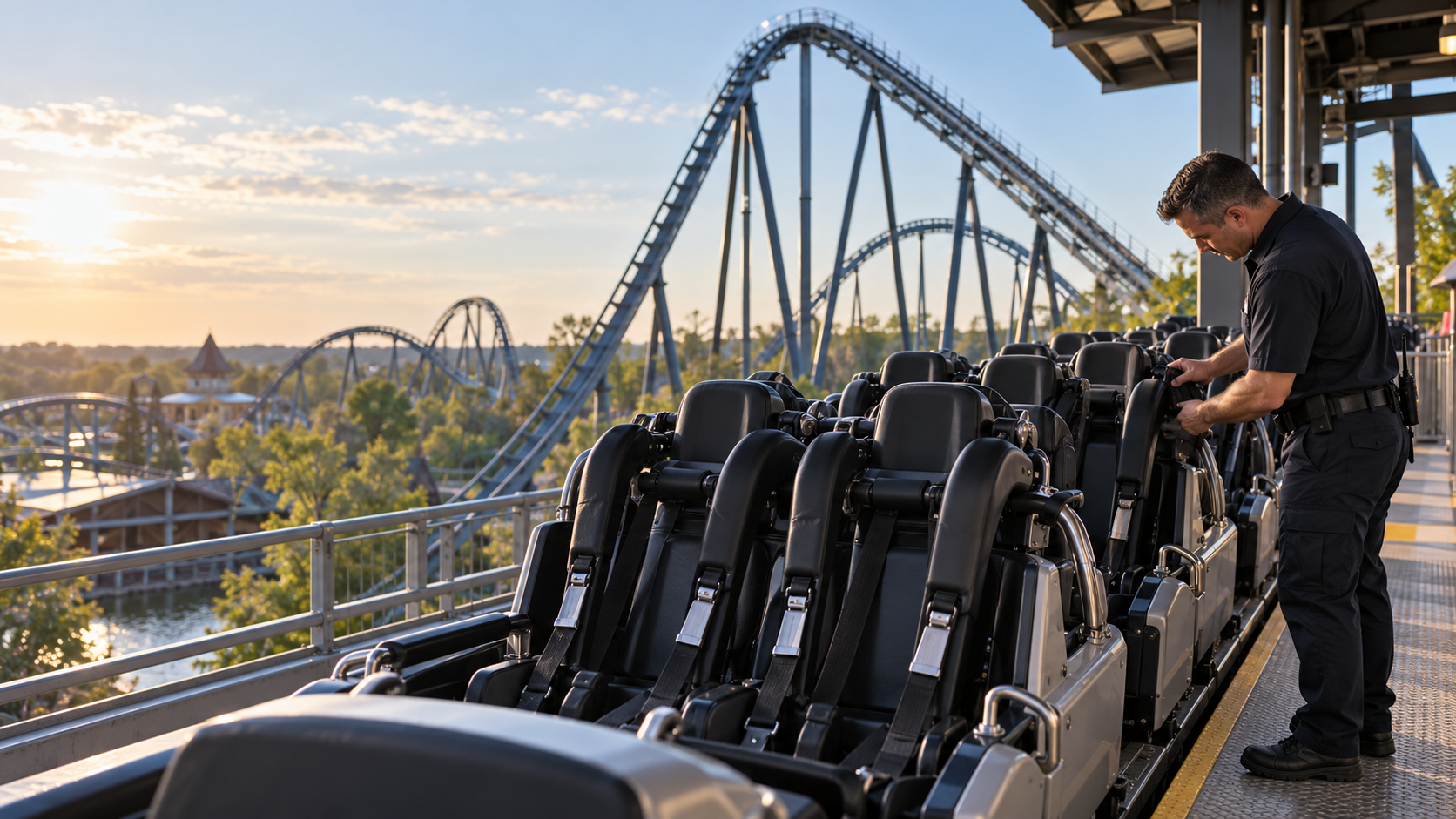
Reports say Six Flags intends to add seatbelts to selected roller coasters, including Goliath, as an additional safety measure. The available information does not say whether the belts will replace existing lap bars, shoulder restraints, or other primary systems. On some rides, a seatbelt serves as a secondary restraint rather than the main mechanism securing a rider.
Adding a safety feature after an accident can be a precautionary measure. It does not, by itself, prove that the previous restraint system was defective or that Six Flags was negligent. It also does not establish that seatbelts would have prevented the death.
The reports do not identify every affected ride or park, provide an installation schedule, or state whether regulators required the changes.
How Roller-Coaster Restraints Work
Roller coasters use different restraint systems, including lap bars, over-the-shoulder restraints, harnesses, and seatbelts. A seatbelt may serve as a primary restraint, a backup mechanism, or an additional verification point, depending on the coaster’s design and manufacturer specifications.
Restraint safety depends on several factors:
- Engineering and equipment condition
- Proper fit
- Correct locking
- Operator verification
- Compliance with height and body-size limits
- Maintenance and inspection procedures
- The rider’s position during the ride
A seatbelt is not a universal guarantee against injury or death. It functions as part of a broader safety system that includes ride design, maintenance, inspections, staff procedures, and rider compliance.
Goliath’s Planned Reopening
Reports say Six Flags plans to reopen Goliath with seatbelts after the fatal fall. The supplied sources do not provide a confirmed reopening date.
The ride’s return could depend on completion of the modification, internal inspections, regulatory or local approval, any pending investigation, staff training, and operational testing. A reopening would indicate that Six Flags and relevant authorities had allowed the ride to resume under applicable procedures, but it would not necessarily answer every question about the incident.
Before visiting, riders should check Six Flags’ official website and customer-service channels for:
- Goliath’s operating status
- Reopening updates
- New restraint requirements
- Height, body-size, and health restrictions
- Temporary closures
- Testing or limited-operation notices
Guests should report a loose, uncomfortable, or improperly locked restraint before dispatch. They should not attempt to loosen, bypass, or alter a restraint themselves.
Lawsuits and the Broader Safety Context
One report says Six Flags faces lawsuits alleging safety concerns. Those claims should be treated as allegations, not proven findings. The existence of litigation does not establish that Six Flags violated safety laws or caused the rider’s death.
The supplied reports do not identify the plaintiffs, specific legal claims, courts, or current case status.
A full investigation could examine ride inspection records, maintenance logs, operator training, dispatch procedures, witness accounts, surveillance or ride video, medical examiner findings, regulatory reports, manufacturer instructions, and the rider’s position and circumstances before the fall.
The decision to add seatbelts may represent a precautionary improvement rather than an admission of fault. Safety requirements can vary by ride design, state regulation, local inspection rules, manufacturer specifications, and industry standards.
What Remains Unknown
Important unanswered questions include:
- What caused the rider to fall from Goliath?
- Did investigators identify a restraint, operational, medical, or rider-related factor?
- Were any safety violations found?
- Which roller coasters will receive seatbelts?
- When will the modifications be completed?
- Will the new restraints change boarding or dispatch procedures?
- Who will inspect and approve the changes?
- Have regulators issued findings or corrective orders?
Official Six Flags statements, manufacturer documents, inspection records, regulatory materials, and final investigative reports would provide additional context.
Conclusion
Six Flags plans to add seatbelts to selected roller coasters, including Goliath at its Georgia park, after a rider died following a fall from the ride. Reports say Goliath is expected to reopen with the additional restraint.
The available information does not establish the exact cause of the death, whether the previous restraint system failed, or the full scope of Six Flags’ safety review. It also does not prove liability or show that seatbelts alone would prevent future accidents.
Riders should rely on official park updates, posted instructions, and information from regulators as Goliath’s modifications and any investigation continue.
Frequently Asked Questions
Why is Six Flags adding seatbelts to some roller coasters?
Six Flags is reportedly adding seatbelts after a rider died following a fall from Goliath at its Georgia park. The company has presented the change as an added safety measure, but the available reports do not establish whether the previous restraint system caused the incident.
Will Goliath reopen with seatbelts?
Reports say Goliath is expected to reopen with seatbelts. The supplied sources do not provide a confirmed reopening date or details about final inspections and approvals.
Are all Six Flags roller coasters getting seatbelts?
No. The reports refer to selected roller coasters and do not identify every affected ride or indicate that all Six Flags coasters will receive seatbelts.
Do seatbelts make roller coasters completely safe?
No. Seatbelts may provide an additional restraint, but safety also depends on ride design, maintenance, inspections, operator procedures, proper fit, and compliance with posted rules.
What caused the rider’s death on Goliath?
The supplied summaries state that a man died after falling from Goliath, but they do not provide the official cause of the fall or the results of an investigation. Further details should come from verified statements by investigators, regulators, Six Flags, or court records.
What should riders do when Goliath reopens?
Riders should check Six Flags’ official operating updates, follow posted requirements, remain properly seated, and report any restraint concern before the ride starts. They should not modify, loosen, or bypass a safety device.
Artikel Terkait
-
 Ondrej Suri and the Hidden Work Keeping PHP Secure
-
 Amgen Reports 58% Lower Death Risk in Lung Cancer Trial
-
 Merck Executive Unruffled by Cancer Vaccine Data Leak
-
 Halloween Candy Sales Slow as Chocolate Prices Rise
-
 Six Flags to Add Seat Belts to Goliath Roller Coaster
-
 Zuckerberg California Wealth Tax Deal Explained