Stock Market Today: Dow Surges 1,500 Points
Stock Market Today: Dow Surges 1,500 Points as Stocks Rally After Election Result
Published: November 4, 2026
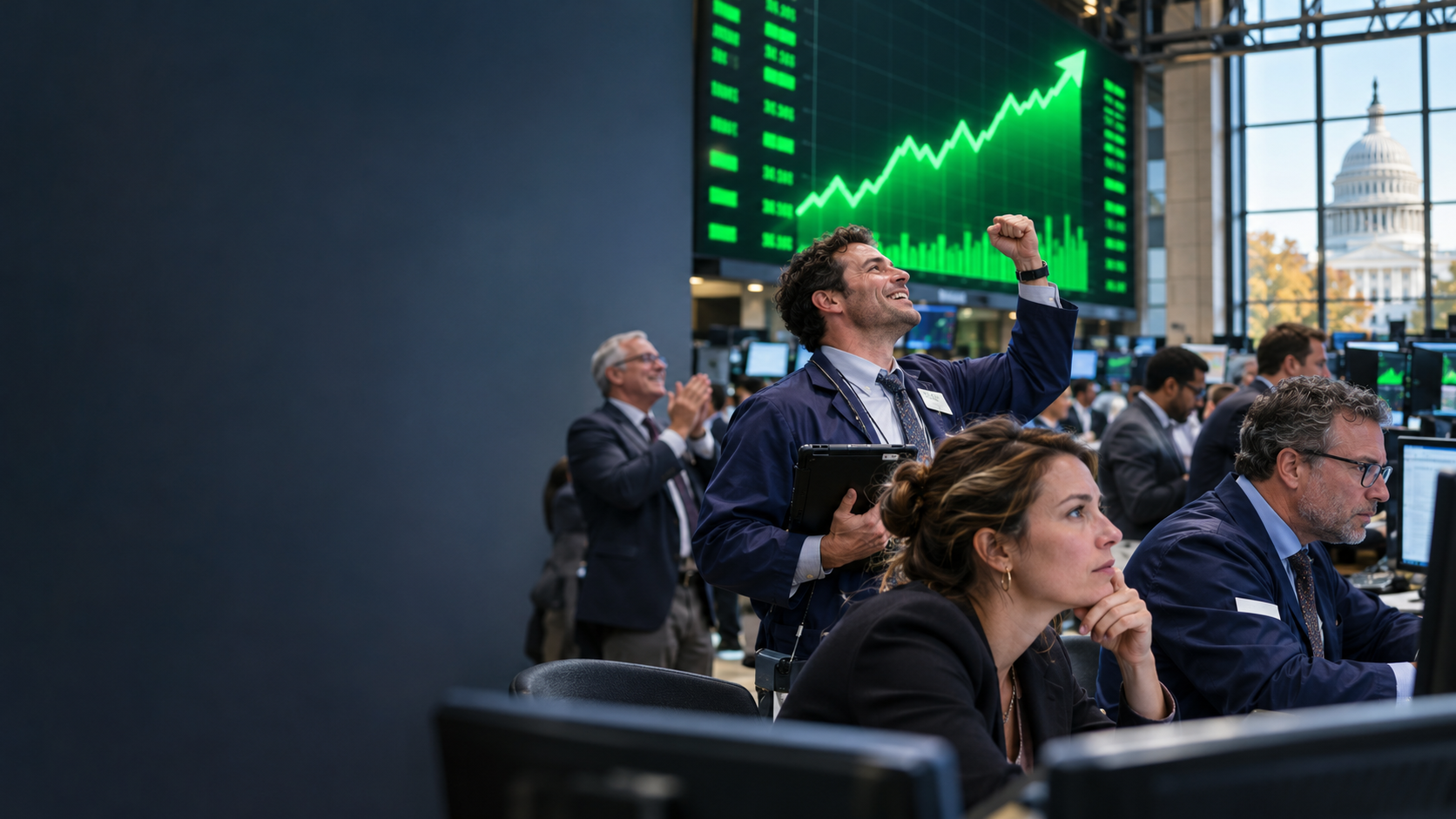
The stock market today moved sharply higher after Democrats won control of Congress. The Dow Jones Industrial Average rallied approximately 1,500 points, while the S&P 500 and Nasdaq also advanced. U.S. stocks surged broadly, oil prices fell sharply, and gold reportedly gained about 3.30%.Source 1
The initial reaction reflects changing expectations for fiscal policy, taxes, regulation, government spending, interest rates, and corporate earnings. It does not establish a permanent market trend or guarantee future returns.
The supplied reports do not provide verified closing levels, percentage changes, intraday highs and lows, trading volume, or market breadth. Those figures should be confirmed with official exchange or index data before publication.
What Happened in the Stock Market?
The Dow Led the Rally
The Dow rallied approximately 1,500 points after Democrats won control of Congress. Some reports described the move as a gain of more than 1,500 points.Source 9
A point change does not show the full size of a market move. Investors should compare the Dow’s point gain with its percentage increase and review its closing level, intraday range, volume, and advancing and declining components.
The rally may reflect a rapid change in expectations rather than a single new economic development. The election result was the apparent catalyst for reassessing the policy and economic outlook.
The S&P 500 and Nasdaq Also Advanced
The S&P 500 rose after the election result. Because it covers large companies across multiple industries, it provides broader market exposure than the price-weighted Dow. The supplied reports confirm a gain but do not provide a verified closing level or percentage increase.Source 3
The Nasdaq also ended higher. Its substantial exposure to technology and growth companies makes it sensitive to interest rates, regulation, corporate taxes, government spending, and growth expectations. The supplied reports do not identify the companies or sectors that led either index.
Why Did Stocks Rally?
Investors Reassessed the Policy Outlook
Markets price expected future conditions, not only current economic data. A change in congressional control can affect expectations for fiscal policy, taxes, regulation, spending, trade, and corporate earnings.
The rally suggests that investors initially viewed the election outcome as favorable for risk assets. That interpretation could reflect expectations for a clearer legislative process, higher government spending, or a different balance between economic support and regulation.
This reaction is not a guaranteed economic outcome. Proposed policies may change during negotiations, face opposition, or fail to become law. Markets can also reverse an initial move as investors receive more information.
Fiscal and Sector Expectations Shifted
Congressional control may influence expectations for infrastructure, social programs, energy, healthcare, corporate taxation, and consumer support. Potentially higher spending could benefit some industrial, construction, transportation, and materials companies, while healthcare and energy policies could affect companies differently across those sectors.
Investors should distinguish campaign commitments, proposed legislation, enacted laws, and implemented policy. Each stage can produce a different market response.
Oil Prices Fell as Stocks Rose
Oil prices fell sharply during the same session in which U.S. stocks surged, according to reports from Anadolu Ajansı and other outlets.Source 5
Lower oil prices can reduce fuel and transportation costs, support consumers and fuel-sensitive businesses, and ease headline inflation. However, they can pressure oil producers’ revenue, margins, capital spending, and investment returns.
The supplied reports do not establish the cause of the decline. Oil may fall because of increased supply, weaker demand expectations, currency movements, geopolitical developments, or production policy. A demand-driven decline could signal weaker global growth, while a supply-driven decline may benefit consumers without implying weaker demand.
Gold Also Rose
One supplied report stated that gold gained approximately 3.30% during the session.Source 9
The final figure should identify whether it refers to spot gold, futures, or another benchmark and should include the closing price. Gold often responds to inflation expectations, currency movements, real interest rates, geopolitical uncertainty, and demand for defensive assets.
A simultaneous rise in stocks and gold does not represent one simple market view. Investors may expect stronger corporate conditions while also seeking diversification or protection against policy uncertainty.
What Investors Should Watch Next
- Congressional policy: Track proposed legislation, funding, tax provisions, and regulatory measures.
- Federal Reserve policy: Monitor inflation, employment, consumer spending, Treasury yields, and central-bank communications.
- Corporate earnings: Review revenue, margins, guidance, capital spending, labor costs, and consumer demand.
- Market breadth: Examine equal-weighted performance, small-cap participation, volume, new highs and lows, and sector leadership.
- Oil, gold, and the dollar: Confirm benchmark definitions and closing prices before drawing conclusions.
A one-day surge does not establish a new market trend. Investors should avoid major portfolio changes based solely on one election-related session. Decisions should reflect diversification, financial circumstances, time horizon, and risk tolerance. This article provides general financial information, not personalized investment advice.
Key Takeaways
- The Dow rallied approximately 1,500 points after Democrats won control of Congress.
- The S&P 500 and Nasdaq also gained.
- Oil prices fell sharply during the reported session.
- Gold reportedly gained approximately 3.30%, although the benchmark requires confirmation.
- Investors reassessed political, fiscal, regulatory, and economic expectations.
- Future market direction will depend on legislation, Federal Reserve decisions, economic data, corporate earnings, interest rates, and market breadth.
FAQ
Why did the Dow rally 1,500 points?
Investors reacted to Democrats winning control of Congress and reassessed expected fiscal, regulatory, tax, and economic policies. The supplied reports do not provide a verified final closing level or percentage gain.
Did the S&P 500 and Nasdaq also rise?
Yes. The supplied reports state that both indexes gained, but their exact closing levels and percentage changes require confirmation from official market data.
Why did oil prices fall while stocks rose?
Oil can fall because of weaker demand expectations, increased supply, currency movements, production decisions, or geopolitical developments. The supplied reports do not establish one definitive cause.
What happened to gold prices?
One supplied report stated that gold gained approximately 3.30%. The published figure should identify the relevant benchmark and include its confirmed closing price.
Does the rally mean prices will keep rising?
No. A one-day rally does not establish a lasting trend. Investors should evaluate earnings, interest rates, inflation, economic growth, market breadth, volatility, and future policy developments.
Artikel Terkait
-
 Voters Reject Nearly All 2026 Data-Center Ballot Measures
-
 CVS Plans to Separate Pharmacy and Insurance Businesses
-
 E.l.f. Beauty Reports 51% Sales Growth, Raises Guidance
-
 CVS Health Breakup: What the Split Could Mean
-
 Dow Jumps 1,000 Points After Democratic Sweep
-
 Why Politics Could Slow AI Infrastructure Growth