Washington Reports First U.S. Bird Flu Death of 2026
Washington Reports First U.S. Bird Flu Death of 2026
Washington has reported the first bird flu-related death in the United States in 2026, according to reports cited by CNN and UPI. The case involved a resident of Yakima County who reportedly became infected after exposure to infected cattle. Health officials said the risk to the general public remains low.
The supplied reports do not confirm the patient’s age, medical history, virus subtype, precise exposure route, diagnosis date, or death date. Those details should be added only after confirmation from the Washington State Department of Health, the Centers for Disease Control and Prevention, or another authoritative source.
What Happened in Washington?
The reported case involved a Yakima County resident who developed a bird flu-related illness and later died. Available source summaries link the illness to exposure to infected cattle, but they do not identify the exact setting or route of exposure.
Possible exposure settings include farm work, veterinary care, animal handling, milking operations, or contact with contaminated equipment. The supplied reports do not confirm which circumstances applied in this case.
The death has been described as the first bird flu-related death reported in the United States in 2026. That designation depends on national surveillance and may be clarified as agencies publish updated data.
What Is Bird Flu?
Bird flu, or avian influenza, refers to infections caused by influenza viruses that primarily circulate among birds. Some avian influenza viruses can infect mammals, including poultry, wild birds, dairy cattle, other animals, and people.
H5N1 is one avian influenza subtype known to infect birds, mammals, and people. However, the supplied reports do not confirm that H5N1 caused the Washington death. The subtype should not be identified without an official announcement.
Human infections can range from mild illness to severe disease. Possible symptoms include:
- Eye redness or conjunctivitis
- Fever
- Cough
- Sore throat
- Muscle aches
- Fatigue
- Shortness of breath
Symptoms alone cannot confirm bird flu. Anyone with relevant animal exposure should tell a healthcare provider or local health department about that exposure, even if symptoms are mild.
Why Officials Say Public Risk Is Low
The reported case was associated with exposure to infected cattle rather than an identified chain of community transmission. People who do not have direct contact with infected animals generally face a much lower risk under the current assessment.
A low public-risk assessment does not minimize the seriousness of the death or mean infection is impossible. It reflects the pattern of known cases and available surveillance evidence.
The supplied reports do not establish sustained person-to-person transmission in Washington. Officials may revise their assessment if investigations identify new cases, unexplained infections, or evidence of ongoing transmission.
Who Faces the Greatest Risk?
People who handle infected or potentially infected cattle face the greatest known risk. This group may include:
- Dairy and livestock workers
- Veterinarians and animal-health personnel
- Milking staff
- Livestock transport workers
- People who handle sick or dead birds
- Workers entering contaminated barns or facilities
Exposure can occur through respiratory secretions, milk, feces, contaminated clothing, equipment, or other animal materials. Risk depends on the type, duration, and intensity of contact.
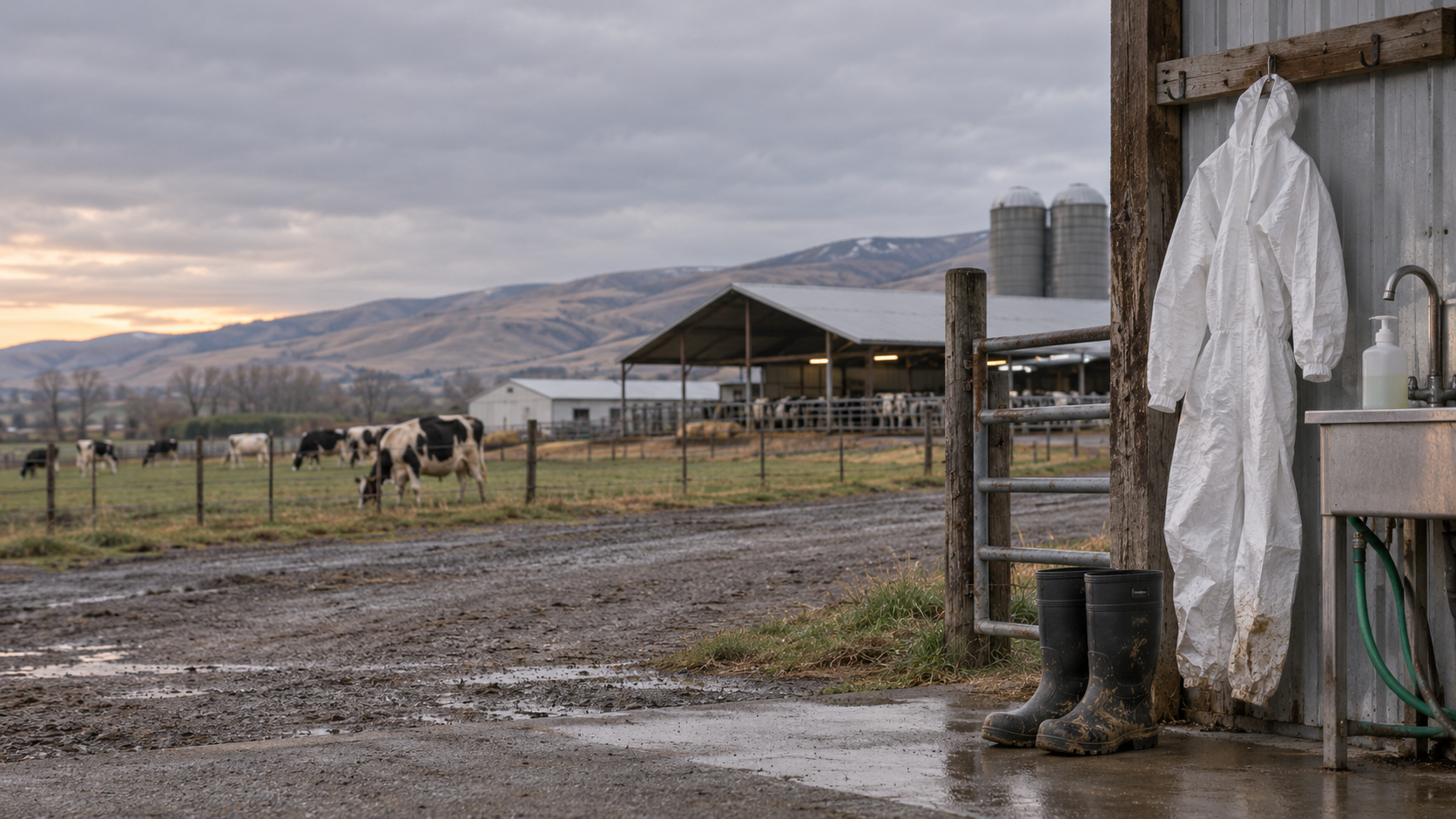
Workers should follow employer instructions, farm biosecurity procedures, and current guidance on personal protective equipment. Recommended measures may include eye protection, gloves, respiratory protection, protective clothing, and thorough handwashing.
People should not touch sick or dead birds with bare hands. Children and pets should be kept away from sick or dead wildlife, and cleanup should follow instructions from local wildlife, agricultural, or public-health authorities.
How Bird Flu Spreads
Avian influenza can spread to people through close contact with infected animals or contaminated materials. Possible exposure routes include:
- Contact with respiratory secretions
- Contact with milk or other bodily fluids
- Droplets or particles produced during animal handling
- Touching contaminated surfaces and then touching the eyes, nose, or mouth
- Contact with infected birds, cattle, poultry, or animal waste
The specific transmission route in the Washington case has not been established by the supplied reports.
Limited person-to-person transmission has been investigated in some avian influenza situations, but that is different from sustained community spread. Health officials examine symptoms, laboratory results, close contacts, and viral sequences to determine whether infections remain linked to animals or show evidence of transmission between people.
Food and Dairy Safety
Pasteurization is designed to inactivate harmful pathogens in milk. Consumers should avoid raw milk and unpasteurized dairy products, particularly during animal disease outbreaks, and follow current guidance from federal and state health agencies.
Food-safety recommendations can change as agencies learn more. Consumers should rely on official guidance rather than infer safety from a single reported case.
What to Do After Possible Exposure
Anyone exposed to infected cattle, poultry, wild birds, or contaminated materials should:
- Contact a healthcare provider or local health department.
- Explain what animal or material was involved.
- State when and how the exposure occurred.
- Report symptoms, including eye redness.
- Follow instructions about testing, monitoring, treatment, and limiting contact with others.
Do not self-diagnose or self-medicate. Antiviral treatment decisions should be made by a qualified healthcare professional.
Seek emergency care for severe or rapidly worsening symptoms, including serious difficulty breathing, chest pain, confusion, bluish lips, inability to stay awake, or signs of severe dehydration.
What Health Officials Are Monitoring
Health departments may identify and monitor people who had close contact with the patient or the same infected animals. Monitoring does not mean that contacts are infected.
Animal-health agencies may test cattle, poultry, wild birds, and other potentially exposed animals. Farms may use movement controls, veterinary testing, protective equipment, and enhanced surveillance.
Laboratories may sequence the virus to assess genetic changes, antiviral sensitivity, adaptation to mammals, and possible transmission patterns. A mutation does not automatically make a virus more dangerous; its significance depends on the complete genetic profile and epidemiological evidence.
The supplied reports do not identify a farm, business, cattle herd, or additional animal cases. Those details should be included only if officially released and relevant to public safety.
What the Death Does and Does Not Mean
The reported death shows that bird flu can cause severe illness after relevant animal exposure. It reinforces the need for protective measures in affected agricultural settings and continued surveillance of cattle, birds, and exposed workers.
The death does not, by itself:
- Prove that bird flu is spreading widely among the public
- Establish sustained human-to-human transmission
- Mean that everyone in Washington faces the same risk
- Justify panic or unsupported claims about ordinary daily activities
- Replace current public-health or animal-health guidance
How to Reduce Risk
The general public can reduce risk by:
- Avoiding sick or dead wild birds and animals
- Washing hands after outdoor or animal contact
- Keeping children and pets away from sick wildlife
- Avoiding raw milk and unpasteurized dairy products
- Following current food-safety guidance
- Checking updates from state and federal health agencies
Livestock workers should use recommended personal protective equipment, follow farm biosecurity procedures, report sick animals, and seek medical advice promptly after possible exposure or symptoms.
Households should keep potentially contaminated clothing, footwear, and equipment away from living areas and follow local cleaning and decontamination instructions.
What Happens Next?
Investigators are expected to continue reviewing the patient’s exposure, monitoring close contacts, testing affected animals, and coordinating state and federal surveillance.
Additional information may clarify the virus subtype, clinical history, precise exposure setting, and whether related cases occurred. Officials may also update the public-risk assessment if new evidence emerges.
The current takeaway is that Washington has reported the first U.S. bird flu-related death of 2026, and the illness was reportedly linked to infected cattle. The death underscores the danger for people who work closely with infected animals. Officials nevertheless continue to assess the risk to the general public as low because available reports do not establish sustained community transmission.
Frequently Asked Questions
Is this the first bird flu death in the United States in 2026?
According to the supplied reporting, the Washington case was reported as the first U.S. bird flu-related death of 2026. The designation should be checked against the latest CDC and state health department data.
Where did the reported death occur?
The case involved a Washington resident from Yakima County. The available material does not provide the patient’s age, exact location, or detailed medical history.
How did the person reportedly become infected?
The illness was reportedly linked to exposure to infected cattle. The exact exposure route has not been confirmed.
Is bird flu spreading between people in Washington?
The available reports do not establish sustained person-to-person transmission. The risk assessment may change if investigations identify additional transmission.
What is the risk to the general public?
Officials reportedly consider the risk low. Risk is higher for people with direct contact with infected cattle, poultry, wild birds, or contaminated materials.
What should someone do after possible exposure?
Contact a healthcare provider or local health department, describe the animal exposure, and follow instructions about testing and monitoring. Seek emergency care for severe breathing difficulty, chest pain, confusion, bluish lips, or rapidly worsening illness.
Readers should follow updates from the Washington State Department of Health, the Centers for Disease Control and Prevention, and local health departments.
Artikel Terkait
-
 Type 2 Diabetes Remission: Intensive Lifestyle Changes
-
 Experimental Diabetes Implant May Lower Blood Sugar
-
 Yakima County Resident Dies After Suspected Bird Flu Exposure
-
 Vitamin D Deficiency Symptoms After a Collapse
-
 Week 42 US Flu Report: What the Data Show
-
 US Group Updates Menopause Treatment Guidelines